
My website hasn’t been updated for over a year and a half now. But today, finally, there is something new. I rarely worked on the Fauvette over the past year, but this summer I regained my enthusiasm and found the time and energy to make further progress.
The left fuselage half which is the first major assembly module is now largely complete. I struggled a bit to produce decent fuselage stringers because I wanted to save money by ripping them myself from pine. The result isn’t perfect, but the fuselage is structurally sound, and I managed to achieve clean contours where the planking will eventually be attached.
The wing roots, constructed from multiple layers of balsa wood, were relatively straightforward to build. After the part templates had been applied using a mild glue stick, the necessary holes were first drilled using a drill press.
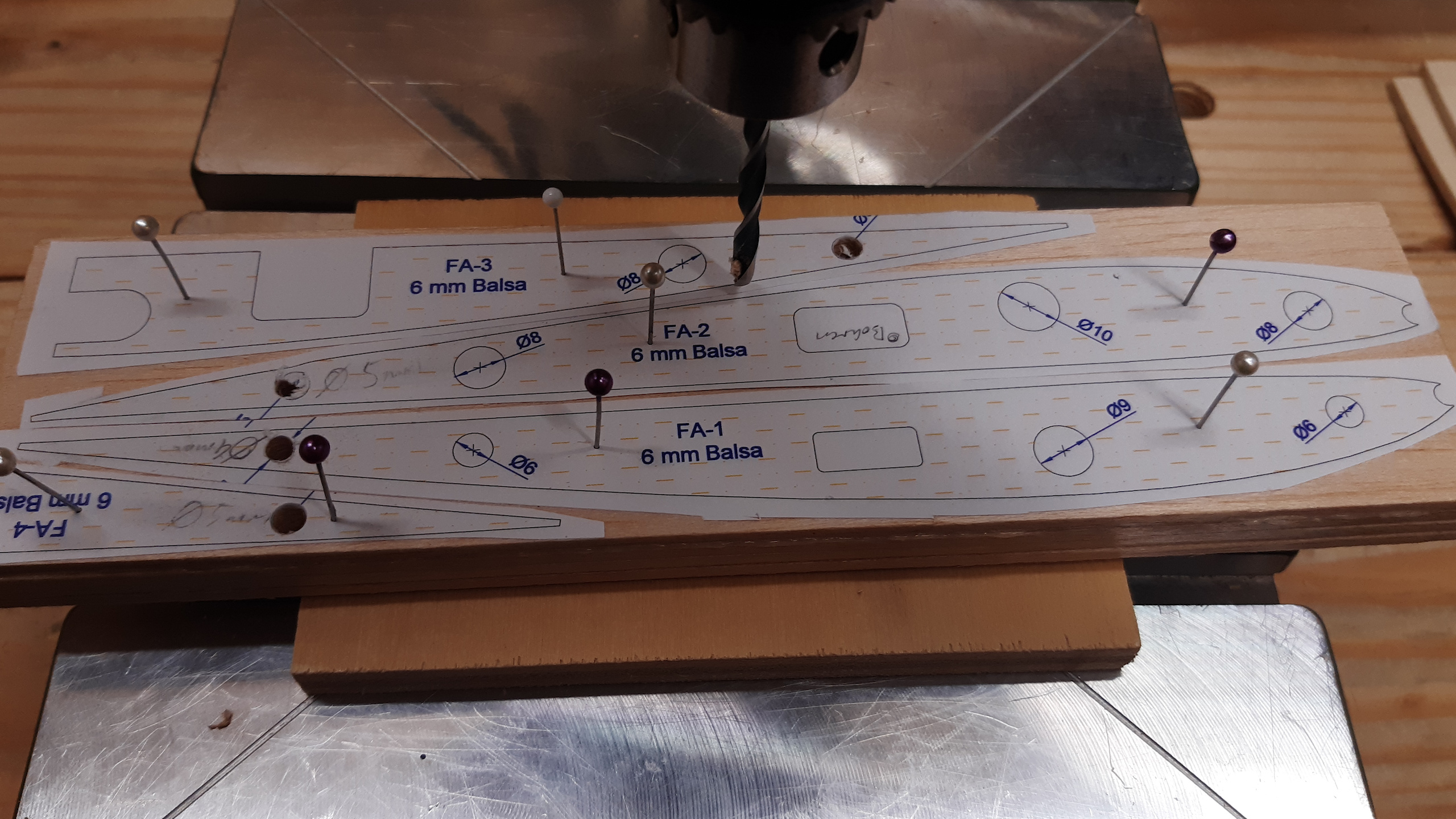
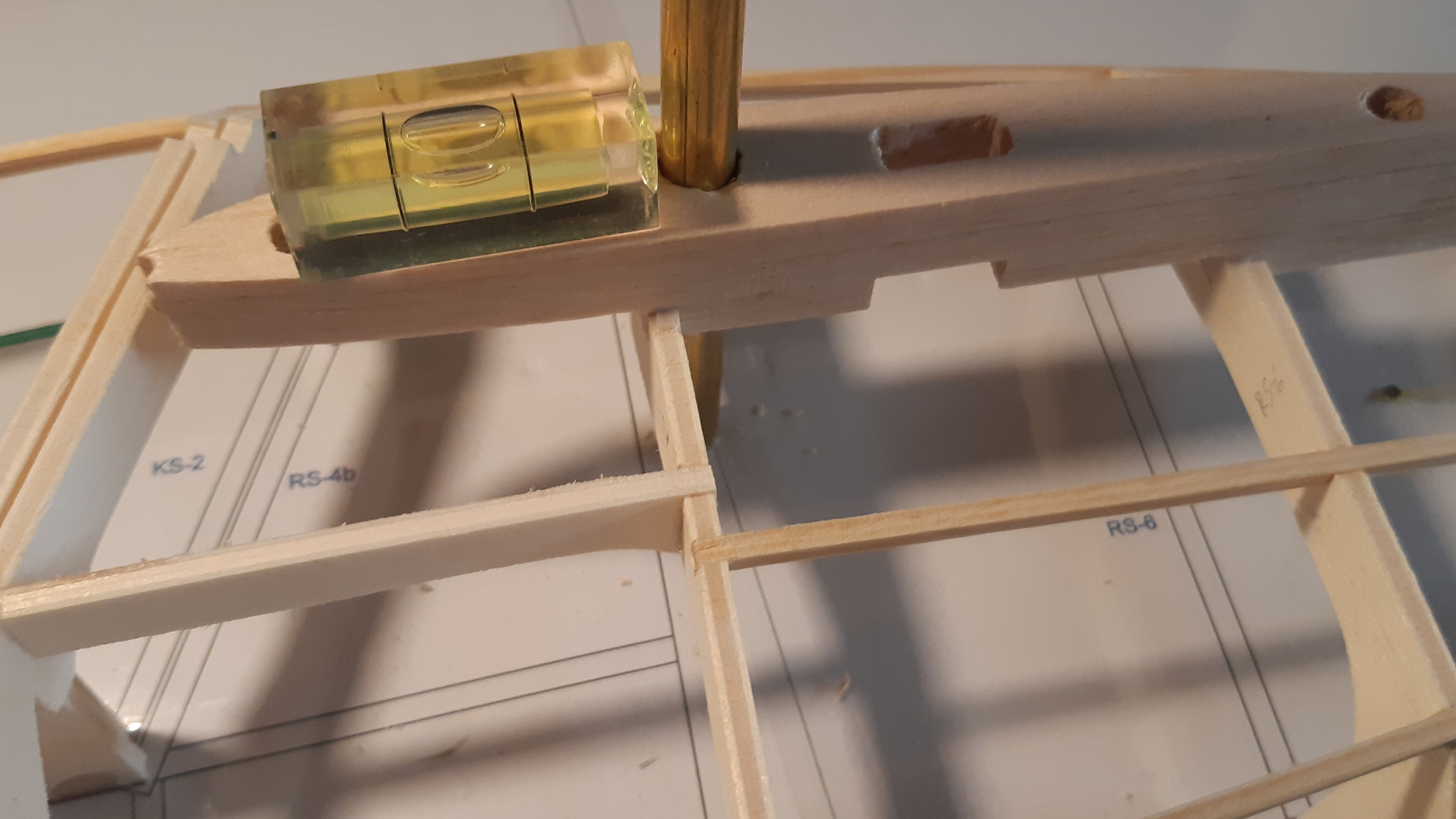
Only then were the parts roughly cut out using a bandsaw and finally sanded to their precise contours with the help of a disc sander. Attaching them to the fuselage longerons was made significantly easier by using the brass tube intended for the wing joiner. A small spirit level served as an additional check.
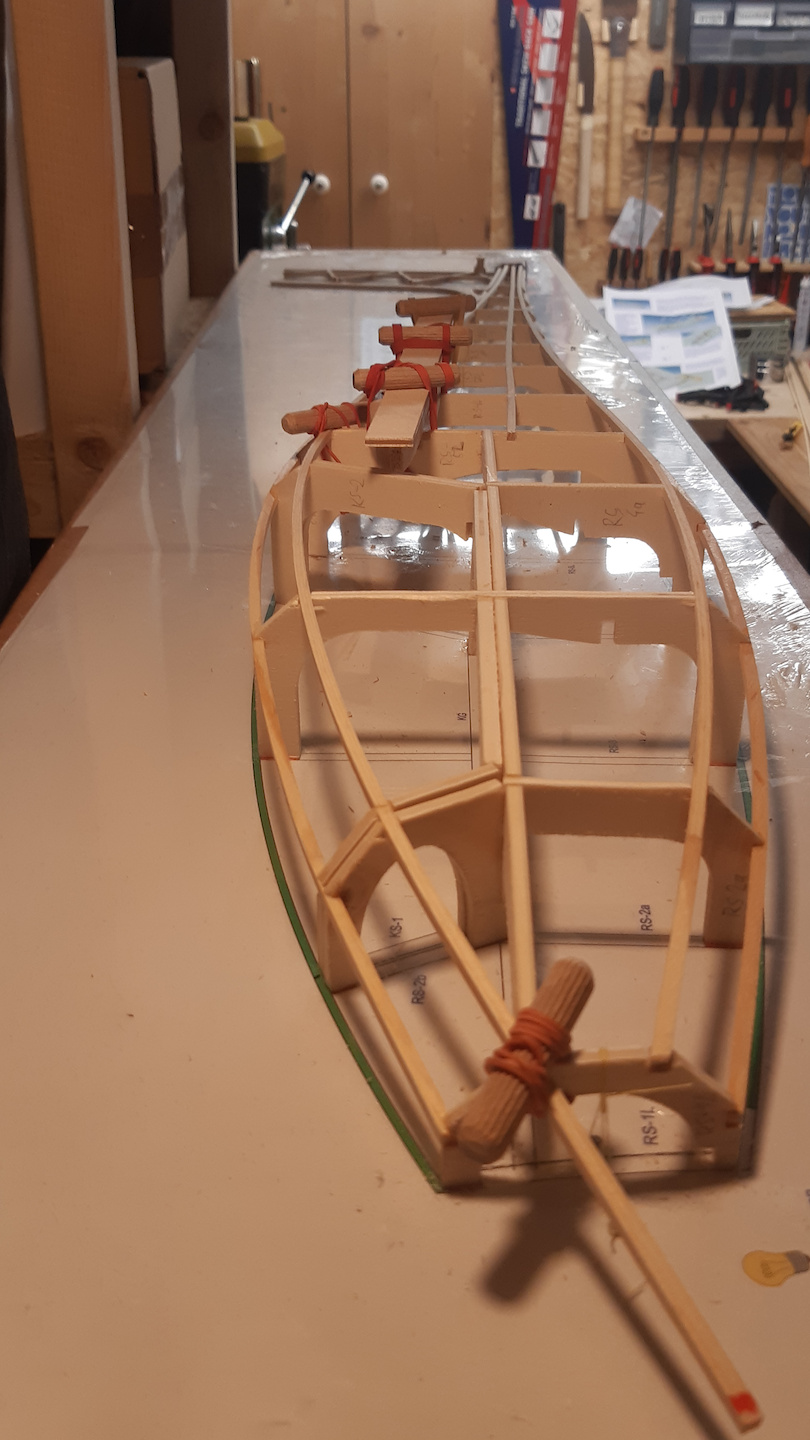
Since this part does need to hold fast, the glued joint was clamped using rubber bands and dowels. A small plywood strip distributes the clamping pressure and prevents the balsa wood from getting dented.
After that, planking is in order. Hilmar Lange designed the layout using large sections cut from balsa sheet, allowing the planking to be completed in just a few steps. To be honest, I somewhat struggled with this technique: I couldn’t cut the parts precisely enough along their full length, so I had to insert small balsa filler pieces in many places. Since the planking for both fuselage halves was created during this same step, I will (have to) proceed the same way on the other side. However, if I ever plank a fuselage myself again, I’ll try the traditional method using many individual strips. I have no idea whether I’ll find that easier or harder. Time will tell.
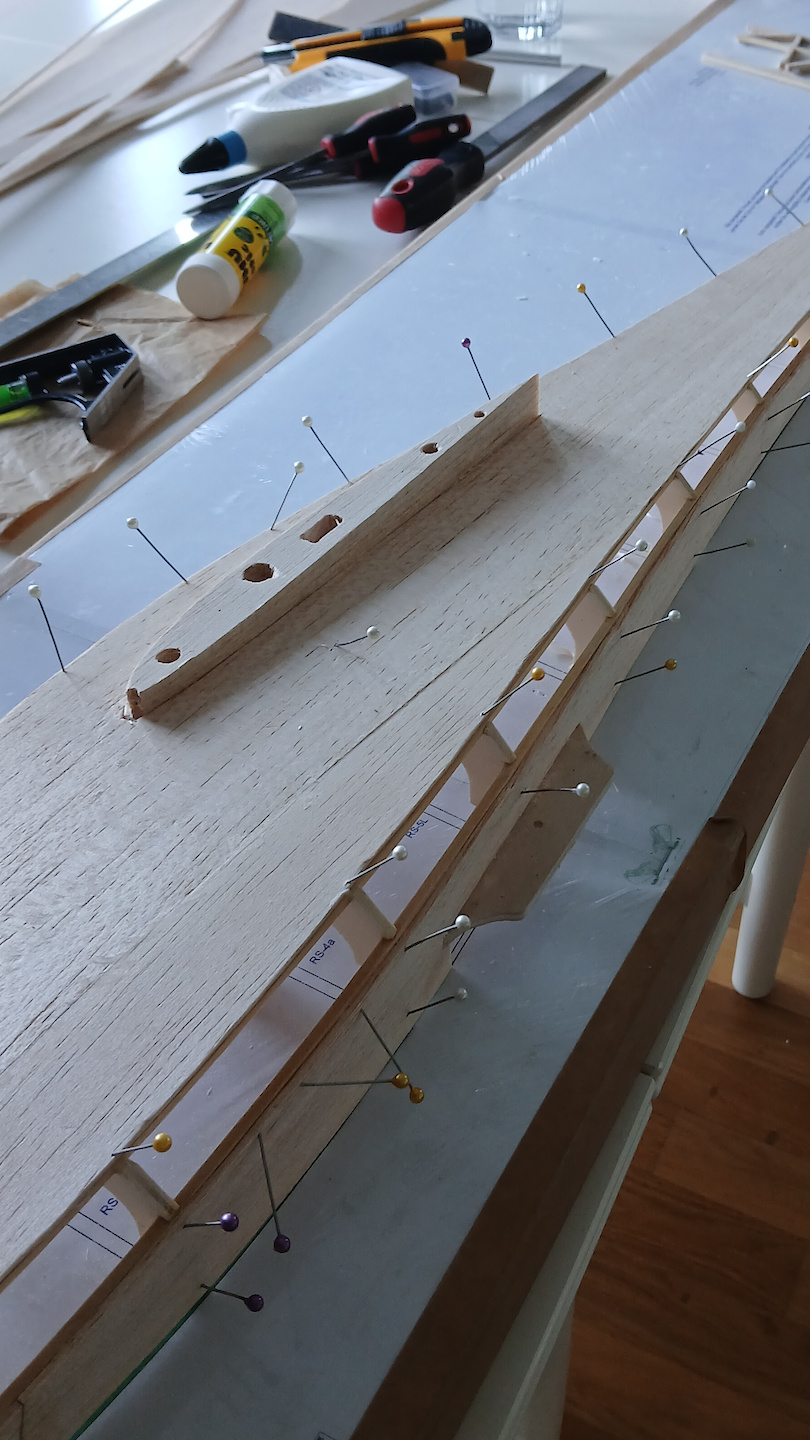
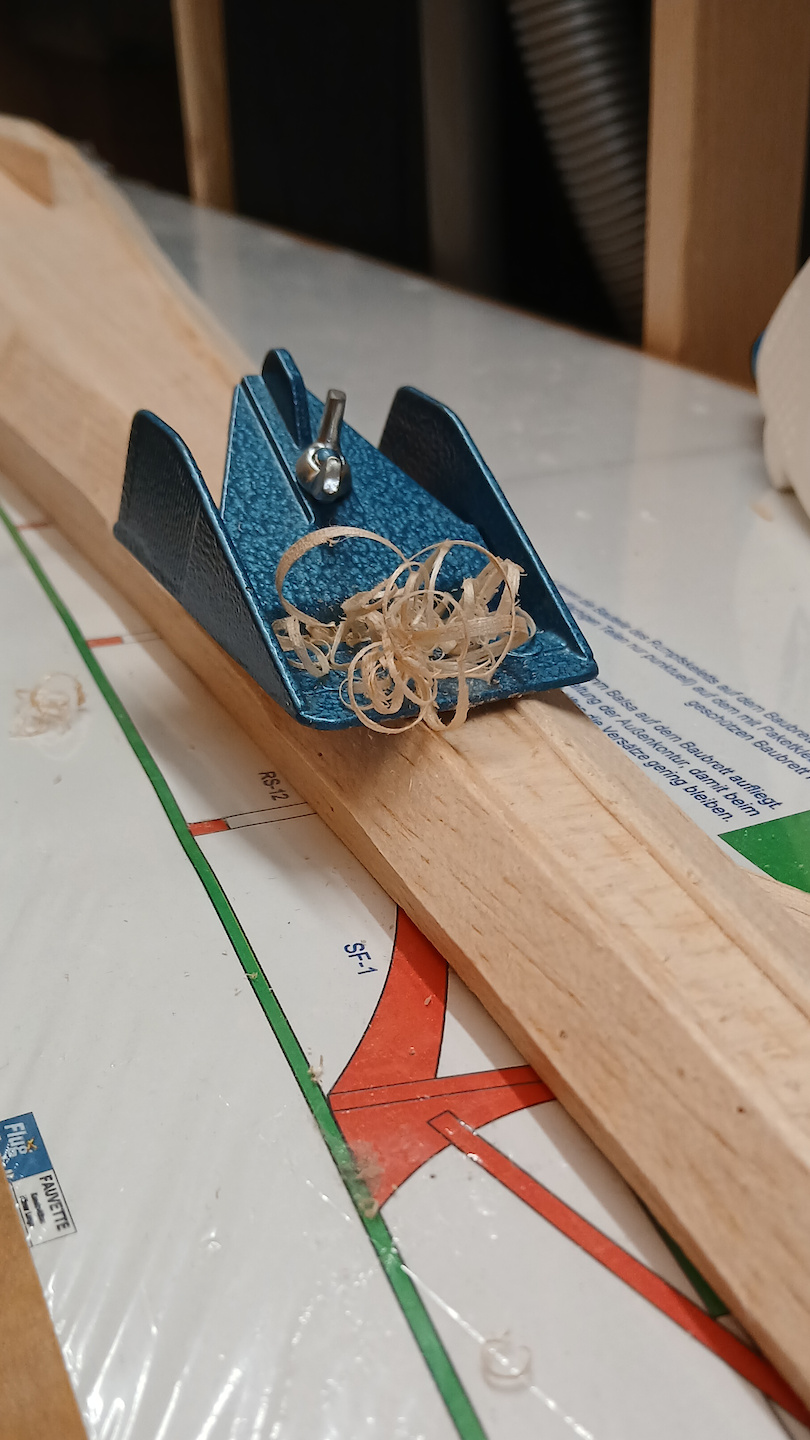
Since the hull has a polygonal cross-section rather than an oval one, the planking has few seam edges that require smoothing. Here, for the first time, I used a small plane instead of sandpaper. The difference is substantial: as long as one doesn’t work against the grain, the result is very clean, dust generation is minimal, and progress is swift.
The final smoothing and organic rounding are then achieved using a sanding block and 240-grit sandpaper.
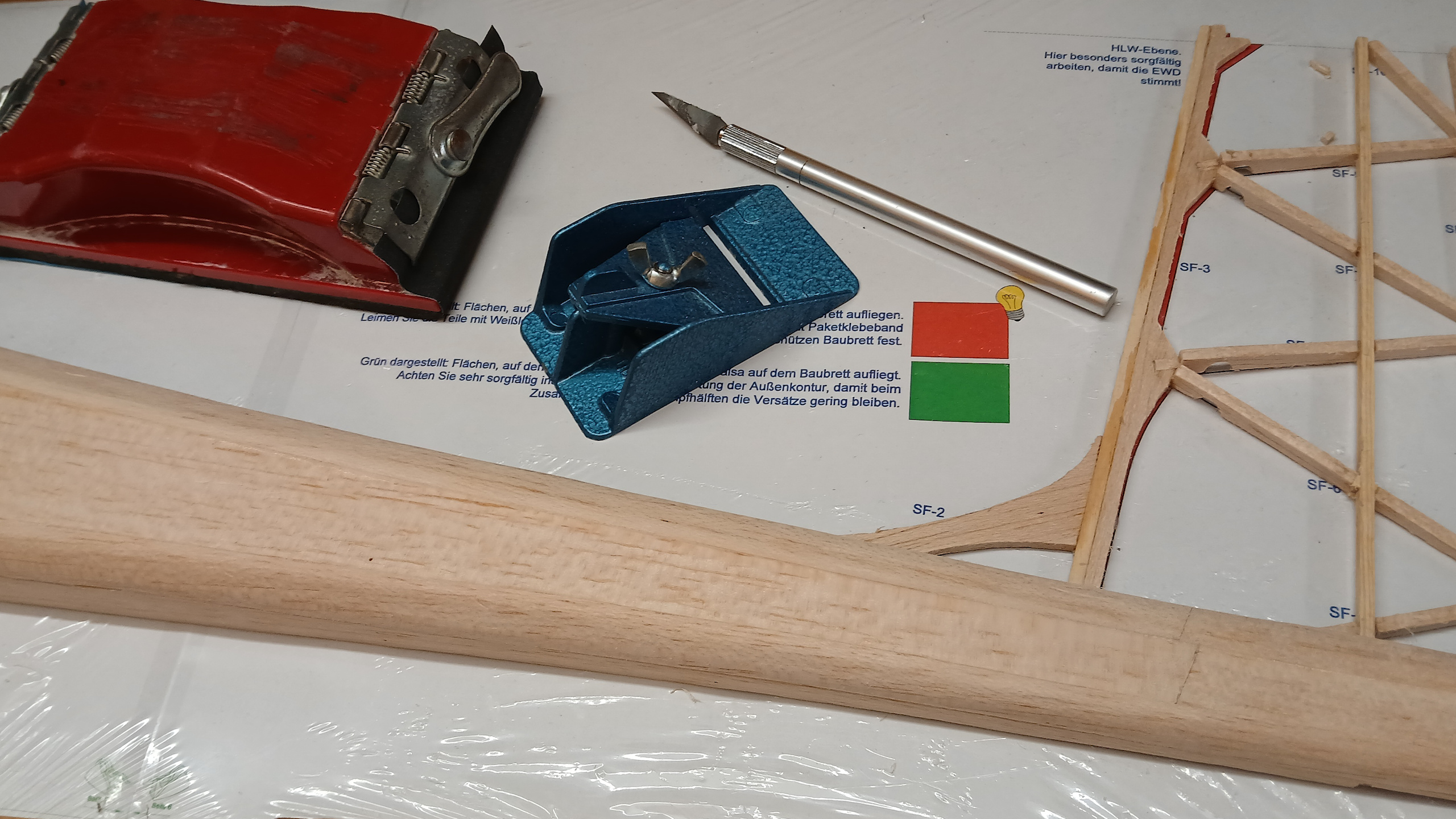
And with that, the first fuselage half is finished. I could actually move on to the second half now, but things turned out a little differently… To be continued.