
Thayer from the railroad-line forums did such a good job at tweaking my second sketch that I now feel confident enough to start on the blueprints. Thanks again, Thayer! So, I omitted drawing the third sketch and just went at it:

Concerning Hobbies
Thayer from the railroad-line forums did such a good job at tweaking my second sketch that I now feel confident enough to start on the blueprints. Thanks again, Thayer! So, I omitted drawing the third sketch and just went at it:
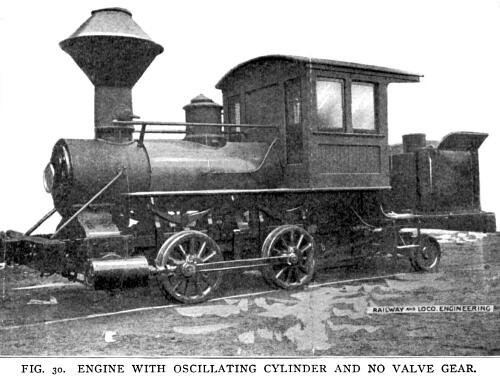
Since I stumbled on a picture of a Dewey Bros. 0-4-2T, I’ve fallen in love with this little engine. My first encounter happened during a Google picture search for industrial steam locomotives.
This particular image came from a book written by Angus Sinclair in 1907: Development of the locomotive engine, where it served as an example for oddities of engineering history. Several universities offer free online access to the book.
Fellow railroad-line.com forums member Thayer and others had a thorough look at my second sketch and out came a very good revision which is going to help me a lot with the actual drawings. Thayer…

For this second sketch, I followed the advice from Bernd, a fellow member at the railroad-line.com forums and drew from the right to the left, starting with the rear wheel. That felt STRANGE. This time I used a straight 1/20.32 scale ruler and a bigger sheet of paper.
On Saturday, I visited the 31st International Model Railroad Exhibition at Cologne, which took place alonside the 8th Cologne’s Live-Steam Meeting.
Looking around, I got some very nice impressions. I had three things in mind: Buy a soldering torch and brazing solder, look for a machine vice and get drivers for the Dewey. No luck with the torch, they had nothing small enough for Fn3 scale. Nevertheless, I bought some very good silver brazing solder. And I’m a very happy owner of a Wabeco machine vice with 100mm working width. *G*
For the next year I’ve set an ambitious goal: I’d like to attempt my very first scratch-build of a steam locomotive in Fn3 (1/20.32, 3-ft-narrow gauge).
My model of choice is an industrial loco of the late 19th century:
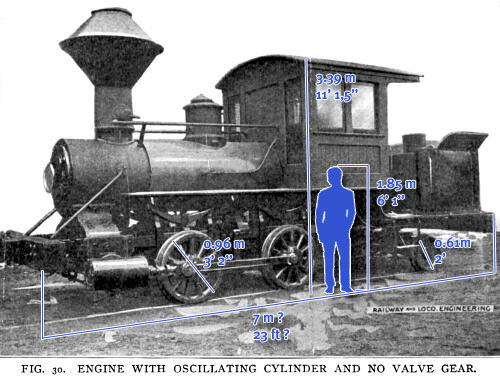
(Source: Sinclair, Angus: Development of the locomotive engine, New York 1907, p.511)
How good to have you!
First time? Learn more about my hobbies and about me.