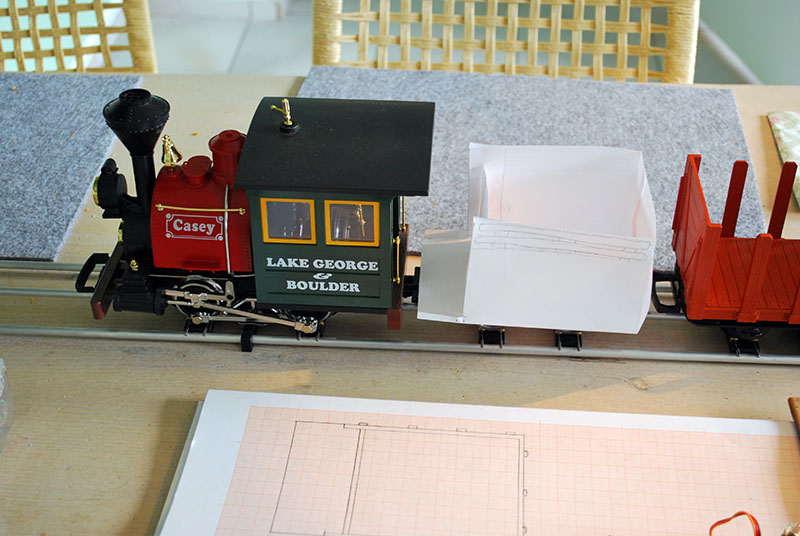
Since last September I’ve worked on a project, which I’d like to present now. It’s about a small Portor steam locomotive by LGB, which I want to switch over to battery that is accumulator power, controlled by R/C. At a later time I’d also like to adapt the looks.
Tender Mockup made of paper
This loco is supposed to make the starting point for my own garden railway, hopefully within this year. September and October were spent with some experiments to place all the necessary components within the locomotive. Alas, I had to take away too much of the lead ballast, so the loco wasn’t able to transmit its motive power to the rails.
Over the past few weeks I’ve spent more time using my camera. In the same time a good friend of my came up with the wish to buy himself a new lens for hiw own camera. He wants an 18-200 zoom to have on the camera most of the time.
When you’re looking up optical performances, prices and functionality for somebody else, you’re inevitably starting to think about your own material. Now I’m wondering: What do I want to achieve with my photos?
Since I don’t have money to waste and I dislike to buy on the first notion, I’ve set up a little challenge for myself, including a goal:
He who takes a picture of 35mm focal length every day and still has fun doing so after 100 pictures, may buy himself a 35mm lens.
What about this silly line?
I’d like to take photos regularly. Practice, practice, practice.
I want to know whether a prime lens suits me better than a zoom.
I need the time (slightly more than three months) to save up enough money for a decent lens.
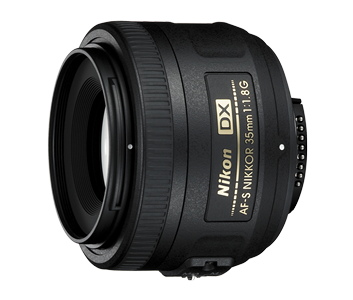
Nikon AF-S DX 35mm 1:1,8G (Copyright Nikon)
So from now on, every day I’m going to set my kit zoom (18-55mm) to 35mm focal length, choose a motive and try to take the best picture I can.
And since for some reason (that I absolutely don’t understand) one tends to be more focused when there’s a goal to pursue, at the end of the road there beckons a 35mm prime lens.
By the way: I chose this specific lens because of a recommendation found at gwegner.de.
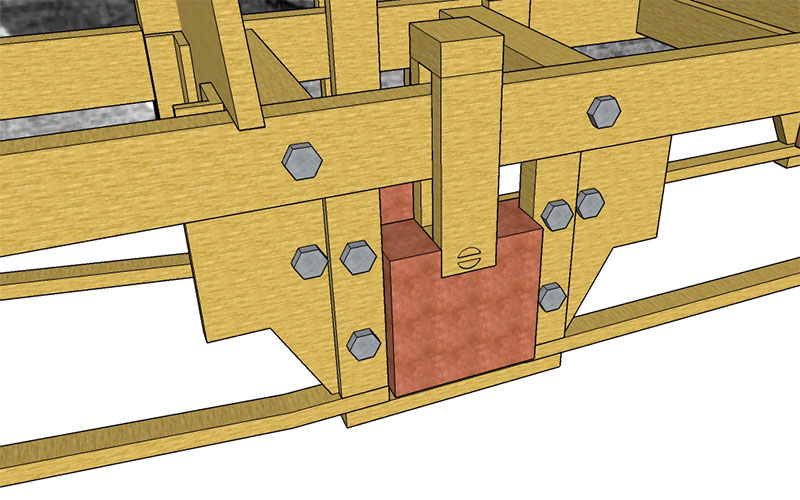
After a long, long break I’ve found some time to work on my locomotive. In order to finally construct the drivers’ axle bearings, I need to be sure about what the springs’ suspension is going to look like.
Today I focused on the Axle Bearing of the Trailing Wheel. I’m currently wondering which would be the best length for its boom. Right now, I’ve got the choice between two versions: the originally drawn, long version and a new one, which is considerably shorter.
A few weeks ago, I re-read my construction diary over at the railroad-line.com forums. Doing that I noticed that I failed to implement all of Thayer’s suggestions into my drawings. Most importantly the stack’s dimensions were too big while the boiler was too small in diametre.
Why do I always notice such things afterwards? There I was, building the smoke saddle with trouble and care, brazing the bracket to the frame, attaching crossbeams… and then the bracket is misplaced and the whole saddle sits lopsided on the frame! -___-
Tonight I finally could make progress on the axle bearings. Until now I scratched my head on how to realize the bearings and especially the connection between the leaf springs and frame in a way that supplies both prototypically accurate and solid results – without purchasing a lathe and mill.
just a quick still-alive-update. Things are changing around here, new job (again!) and a new home.
I don’t think I’ll be able to make any progress with the locomotive before november.
got some progress and some pictures!
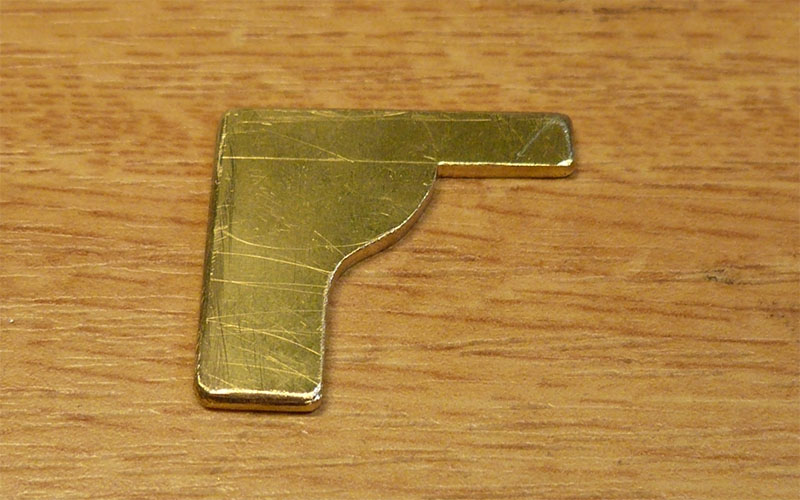
I started constructing the smokebox saddle. Since I own neither a lathe nor a milling machine I’m trying to make virtues out of necessities and hone my manual skills. The first step was to make a gauge for the saddle’s curves, so I could construct two symmetrical and identical parts.
This web site uses cookies to support language selection and comment functionality. No other user-related data is tracked. You can find further information in our Privacy Policy.