Back on Track

After several months of break, I’m back online. Sadly, this break was unvoluntary; on the one hand my PC broke down and the repair took its sweet time, on the other hand there were some issues with my friends and family which kept me from tending my hobbies.

This post relaunches the weekly updates. Even though I couldn’t must much time and strength, the last months have seen some exciting things happening. I will relate one after the other.
No.1 Porter: Chain Winch

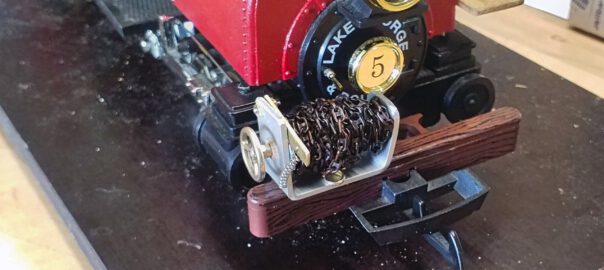
Completely assembled and mounted.

Besides other insights, the Summer Operation Session 2020 revealed that my Porter needs a better stowing place for the shunting chain.

On the one hand the chain easily drops from the loco if it isn’t properly secured, on the other hand it’s quite fidgety to fixate the chain at a given lenght. So I more or less spontaneously got the idea to tinker on a chain winch.

The first steps happend on a whin and I was sure that they wouldn’t succeed, that’s why I didn’t take any pictures. But after I realized I was onto something, I made some after the fact.

Summer Operation Session 2020

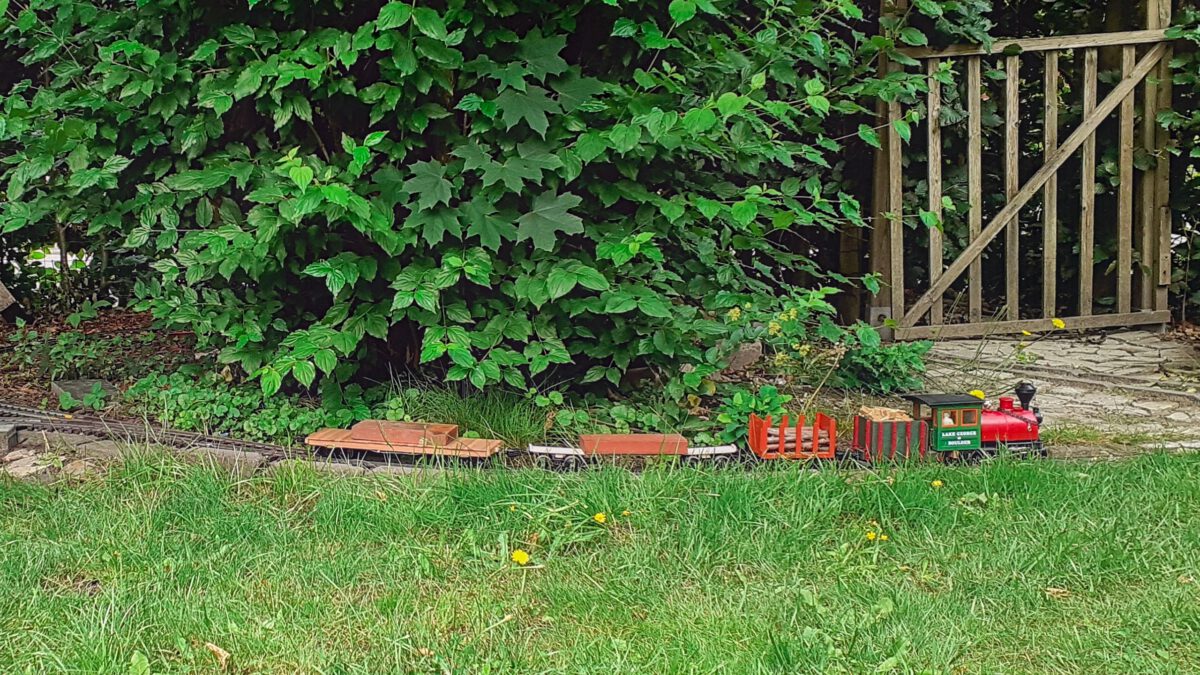
The first short train, consisting of bulkhead, test waggon and the new flatcar.

This operation session was scheduled rather spontaneously and spurred me into building a prototype for a flatcar. Accordingly, I was quite expectant concerning the experience I’d gain with the new waggon.

Since we only had a relatively short time for operations and I was preoccupied with test runs, there are only a few pictures. In return, I learned lots of lessons.

Flatcars Prototype: Floor and Trusses

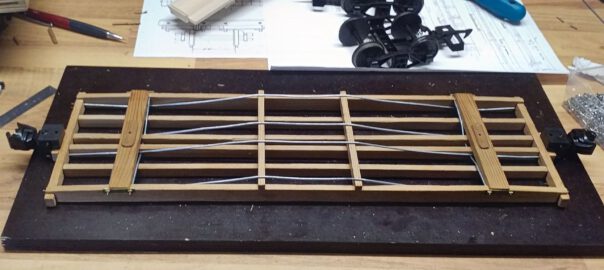
The trusses are complete.

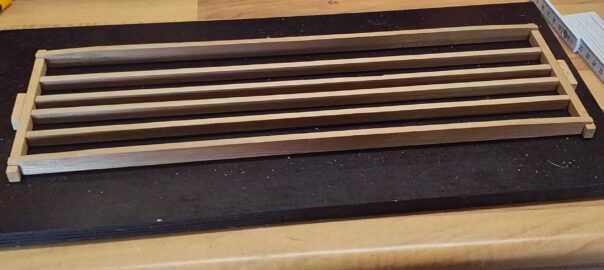
After preparing the frame and floor boards, construction can continue with the underframe. The main components are the body bolsters, needle beams and trusses. Unfortunately, I don’t have got a complete set of diagrams, so I had to guesstimate concerning the longitudinal and cross trusses. However, it’s not rocket science.

Joyrider: Maiden Flight

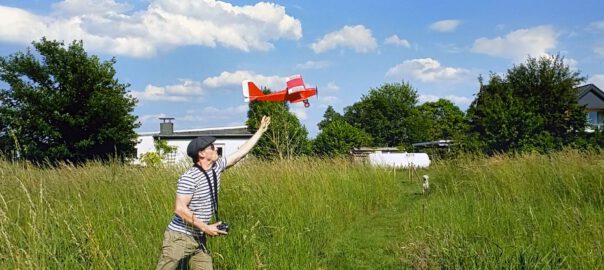
And up into the air she goes!

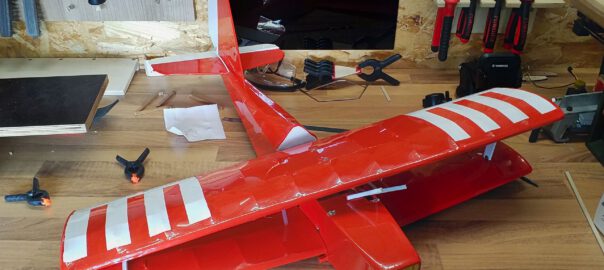
After the first Center-of-Gravity tests my expectations have been thoroughly adjusted. I have to admit, at the beginning of this project I didn’t waste a thought on a possible failure. Meanwhile, the Maiden flight has become some sort of obstacle to me.

During the last weeks I’ve tried to accomodate weather, family and interested friends while taking patience and easing my doubts. That piled up too high: now or never!

A short remark: My wife thankfully took some video footage. However my PC has quit service, so I can’t postprocess. I will hand in the videos as soon as a new PC is at hand. Meanwhile, some still images will have to do.

Flatcars: Experiments

Bogies by Piko and knuckle couplers by Accucraft.

Before I start the actual construction of my planned flatcars, I’d like to know first which limits the tracks will pose on them. I’ve only ever known classic model waggons, which have their couplers on beams attached to the bogies. This design ensures high operational reliability because the couplers can follow even the tightest curve radii. However, it’s not a pretty sight.

So I’d like to build a few test waggons in order to learn how the couplers perform when attached to the waggon’s body.

New Construction Reports: Flatcars

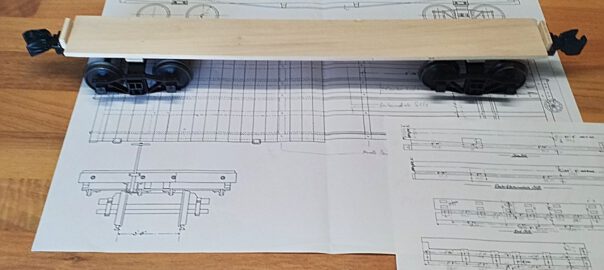
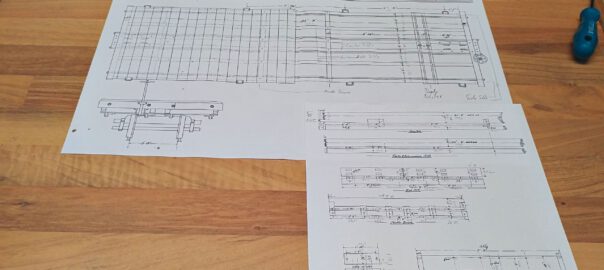
The drawings are printed on large sheets of paper. Courtesy of Union Pacific Historical Society http://uphs.org

For our next operation session I’d like to contribute a few waggons of my own. In that way I will stick to my intentions, that is to focus on a complete train for the time being.

One better starts small. That’s why I’ve picked the construction of freight waggons, precisely: flatcars. The reasons are natural: most US freight waggons based on flatcars or were closely related to them. Furthermore they make the easiest waggons to model, apart from disconnects and skeletons.

Joyrider: Setbacks and Corrections

After a failed center-of-gravity test.

Finishing the covering was another milestone for me and I was very confident that the maiden flight would turn out just fine.
Then the first complete assembly came along and with it some new challenges. Namely undercarriage and center of gravity.

Porter: New Smokestack with Spark Arrestor

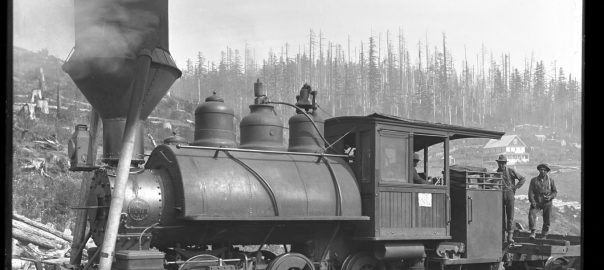
Big spark arrestor on wood burning loco.

Since my porter is serving as a working horse in the vicinity of a logging railroad, she’s burning wood, as one might tell by her tender. The original smokestack has only got a small diamond spark arrestor which doesn’t really fit to a wood burning loco.